I just read another one of those discouraging articles in the New York Times about the low esteem in which America holds its teachers in the 21st century. Author Sam Dillon was referring to public school teachers. While the circumstances have changed since that article was published, educators continue to face significant challenges. Teacher shortages, recruitment difficulties, increasing administrative responsibilities, and evolving educational expectations remain pressing concerns across the United States.
According to reporting from Education Week and research published by UNESCO, schools worldwide continue to grapple with teacher recruitment and retention challenges. At the same time, boarding schools continue to attract talented educators who are looking for opportunities to teach in environments that value academic excellence, meaningful student relationships, and professional growth.
Besides being able to have a job in their chosen profession, why else would professional teachers want to teach in a boarding school? They would want to do so for many of the same reasons why you and I want our children to attend such residential schools. Let's look at some of the factors which might make an experienced public school teacher consider teaching in the private K-12 sector.
Academic Standards
Teachers want to teach. They love their subject. They know it inside and out at the level at which they have been teaching. They know all the tricks and ways to light our children's academic fires.
Children are born curious. As they mature, we can nurture that curiosity, or we can discourage it. Boarding schools typically encourage their students' love of discovery and learning. As I have said so many times, it's cool to be smart in a private school.
Teachers love to teach their subjects. They do not particularly enjoy teaching to a test. Teaching to a test is not something that most private school teachers have to do. Assessing their students' progress is something that private school teachers do class by class. Because class sizes are small, private school teachers can see how their students are doing at a glance. Teaching 12-15 students is very manageable, as opposed to teaching 25-30 students.
Today's boarding school teachers are also helping students navigate emerging technologies such as artificial intelligence. Rather than simply prohibiting AI tools, many schools are teaching students how to use them responsibly while maintaining strong research, writing, and critical-thinking skills. This approach allows technology to enhance learning without replacing the intellectual rigor that has long defined the boarding school experience.
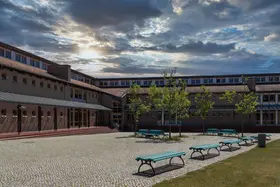
Here is what Peddie School is known for today: rigorous academics, small classes, broad course offerings, and a focus on developing the whole student. Like many leading boarding schools, Peddie combines challenging coursework with opportunities in the arts, athletics, leadership, research, and global studies.
Families researching boarding schools may also find value in Boarding School Review's article on Why Boarding School?.
Stretching Students
It sounds like medieval torture, but the stretching I am referring to is the gentle but persistent stretching of your child's mind. Expanding your child's horizons, exposing her to new ideas and new possibilities, while at the same time placing those ideas and possibilities within a historical context is what any good teacher does.
That's what boarding schools do extremely well.
The reason they can do that is that boarding schools are an authentic immersion experience. That's right. Your child is exposed to consistent shaping and nurturing twenty-four hours a day, seven days a week while she is at school. Each boarding school community sees that as an essential part of the overall boarding school experience.
Small Classes Encourage Intellectual Growth
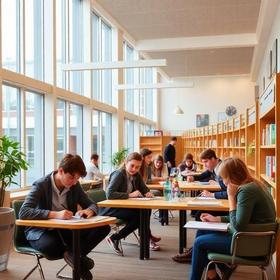
Small classes play a major role in stretching young minds. Small classes encourage discussion and the thoughtful appraisal of ideas that each student offers. All of this is done under the skillful guidance of an experienced teacher who knows where the questions will lead and how the discussion will turn out even before her students have said a word.
Modern boarding schools increasingly use project-based learning, interdisciplinary coursework, design thinking, collaborative problem-solving, and independent research opportunities to stretch students intellectually. Whether students are conducting scientific research, developing entrepreneurial ventures, or tackling real-world challenges, teachers often have the flexibility to guide learning far beyond traditional classroom instruction.
The benefits of this approach are discussed further in Boarding School Review's article on The Benefits of Boarding School.
Depth and Breadth of Coursework
In practical terms, mental stretching occurs within the structure of an academic curriculum that explores writings and concepts in depth.
Your child won't read one sonnet. She will read dozens of them by different authors so that she understands the genre thoroughly. The same principle of exploration applies across the curriculum. As you evaluate boarding schools, review their academic curricula carefully, and you will see what I mean.
Most boarding schools offer extensive academic curricula. Take a look at some of the course offerings. Many of them rival and, in some cases, exceed what many colleges offer when it comes to the depth and breadth of their academic courses.
Many boarding schools have expanded offerings in computer science, data science, artificial intelligence, environmental sustainability, entrepreneurship, and global studies. These additions reflect the changing skills students will need in college and the workforce while preserving the strong liberal arts foundations that characterize many boarding schools.
What makes the boarding school academic experience so superior is that most schools insist on having highly qualified, experienced teachers teaching those courses. Add to that Advanced Placement courses, International Baccalaureate programs where offered, independent research opportunities, capstone projects, and dual-enrollment options, and you have a quality college-preparatory experience.
Why Small Classes Matter
Small classes, which are a feature of most boarding schools, make academic success possible. Small classes permit teachers to offer individual attention to each member of the class as needed.
Small classes ensure that your child will not just be a number. She cannot hide in the back of the class in a small class. And, if the school uses the Harkness Method, she will be seated with her classmates around a large oval table facing her classmates. As I mentioned before, hiding in this class situation is impossible.
Small class sizes also ensure that teachers can teach rather than trying to manage a class of 35-40 teenagers. Large classes create time-consuming disciplinary issues which cut into teaching time.
When you have small classes, you can teach children to think critically. You can encourage children to be all that they can be. The result is a high school graduate ready to take on some serious academic work at the college level.
Parents interested in learning more about residential education may also enjoy Boarding School Review's article on What Makes Boarding School Special?.
Why Teachers Thrive in Boarding Schools
Boarding schools offer teachers opportunities that are difficult to replicate in many other educational settings. Faculty members often serve as mentors, advisors, coaches, dorm parents, and club leaders. They become deeply involved in students' lives both inside and outside the classroom.
This level of engagement allows teachers to see the direct impact of their work and develop meaningful relationships with students over several years. For many educators, that sense of connection is one of the most rewarding aspects of teaching in a boarding school environment.
Many boarding schools also invest heavily in professional development. Teachers frequently have opportunities to attend conferences, pursue advanced study, collaborate with colleagues across disciplines, and experiment with innovative teaching methods.
Student wellness has also become a greater priority. Teachers work alongside counselors, advisors, and residential staff to help students develop healthy habits, manage stress, build resilience, and navigate the challenges of adolescence. For many educators, this holistic approach to student development is one of the most rewarding aspects of boarding school teaching.
Families exploring residential education may also find value in Boarding School Review's article on Boarding School Myths.
Conclusion
Why boarding school? It's all about standards.
In 2026, boarding schools continue to attract outstanding teachers because they provide an environment where intellectual curiosity, academic rigor, and personal growth remain central priorities. Small classes, strong academic programs, meaningful student relationships, and opportunities for innovation make boarding schools appealing places to teach and learn.
As schools adapt to new technologies, changing student needs, and evolving expectations for education, the role of exceptional teachers has never been more important. Boarding schools give those teachers the resources, flexibility, and community support they need to do what they do best: inspire students to reach their full potential.